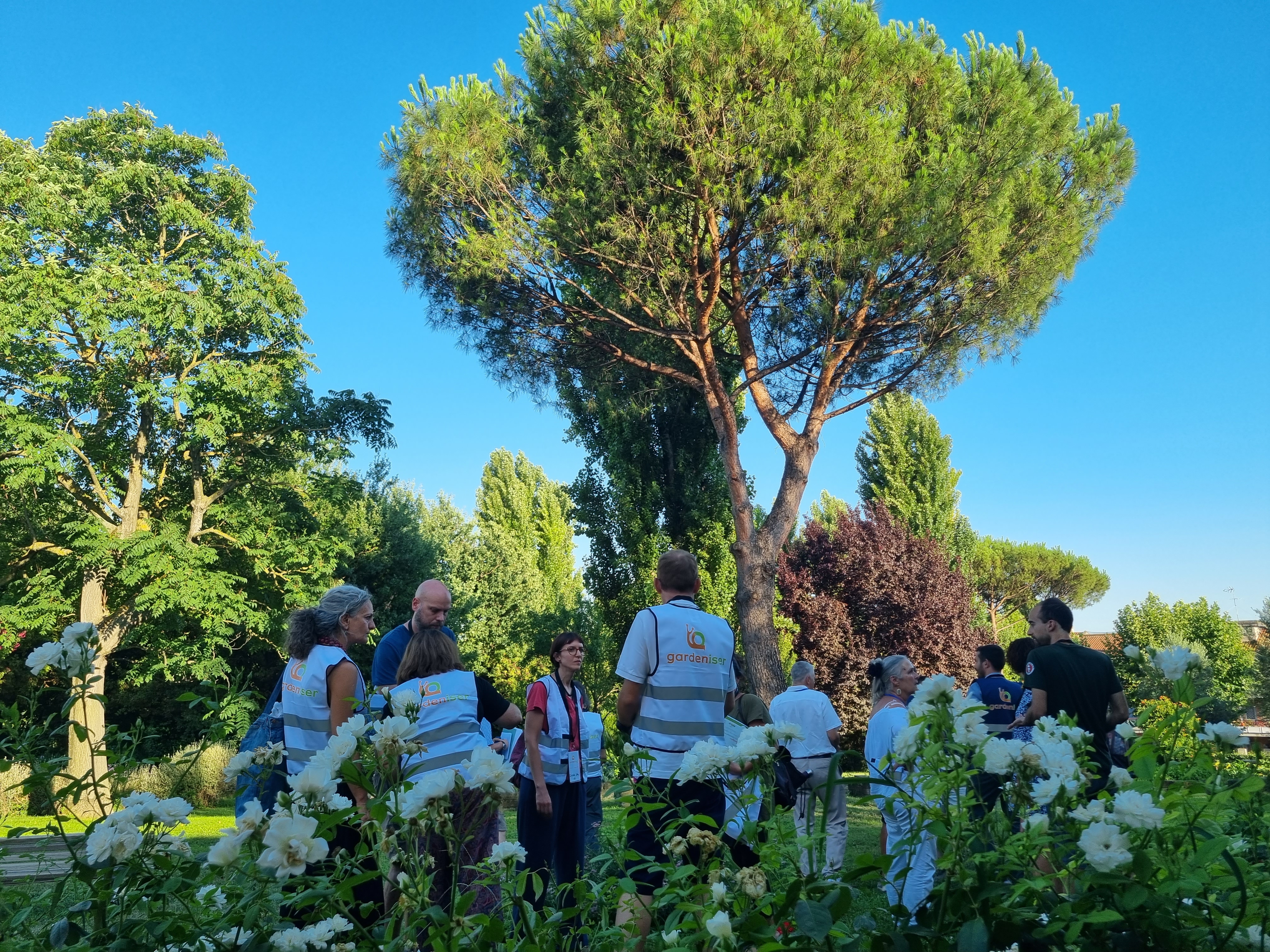
Community gardens can be a place to involve schools and get children coming regularly to their local community/urban garden. There are many opportunities to increase creativity and learning capacity for all ages by using a continuous process of exchange of skills and information between community/urban gardens and students in a community. Schools can also create gardens for their students and the whole community and can provide the perfect environment in which to engage the young and old alike – bringing students, teachers, parents, and local communities together in a shared experience of 'hands on' learning.
All schools, regardless of size or location can benefit from using the natural world as a school resource. By creating a growing area in the school grounds or in the wider community the activities, the growing space brings can create huge benefits for:
• Young people, who get a chance to learn in new, more relevant hands on and exciting ways.
• Teachers, who can broaden and deepen their teaching skills and subject knowledge, while working with more motivated pupils.
• The school, which can use these new resources and approaches to raise achievement.
• The wider community. School garden sites can become a resource for extended provision and community involvement and knowledge about food production, sustainability issues and the environment.
Making it fun!
Keep everyone busy. Taking turns is part of life but keeping any necessary waiting time to a minimum to keep everyone’s interest. Splitting children into smaller groups is easier, withgroups rotated on several different tasks. Teachers, helpers and parents should all take an active role and support activities.
Here are a few tried and tested ideas for education spaces and activities to happen in the garden….
Ponds
Water is a fascinating thing. You don’t need to have a large pond – you could create a marsh area or a bog garden.a shallow pond partially filled with rocks or a mini pond in a barrel with solar powered fountains. It must be securely fenced with a child proof gate and clear lines of sight around it.
Container gardening
In an area with limited space or with little or no soft ground, containers provide a flexible and surprisingly productive solution.Use hanging baskets, windowboxes, pots and planters ofdifferent sizes and shapes. Grow herbs, mini vegetables and soft fruit, even climbers and dwarf fruit trees.
Raised beds
For problems like poor soil, bad drainage, awkward access a raised bed is perfect for marking out boundaries and allowing easy access for children.
The fruit plot
Raspberries, currants, strawberries grapes, apples and plums are all popular with children. Most of them are easy to grow and children love to find the fruit.
The kitchen garden
Combine herbs, veg, fruit, trees, flowers to give everything in on beautiful outdoor space. Get the children preparing a salad or making soup. Grow edible flowers like day lilies and nasturtiums.
All year growing
Extend the growing season and create an all-weather learning space with a poly tunnel or greenhouse.
Sensory gardens
Every garden reaches out the senses in so many ways. Some have been designed to do this more specifically, with textured paths, water features, fragrant leaves and flowers, rattling, rustling grasses and seed pods, soft, furry leaves, sweet or sour leaves and berries, spiky seed heads and birdsong.
Herb gardens
Herbs are grown for culinary, medicinal, sensory and cosmetic purposes.
For many young learners it is important to gain skills and knowledge by seeing its relevance to themselves and the world around them. Young people learn better though practical experience and acquire knowledge and understanding through real life tasks that stimulate their natural curiosity. In this way, knowledge, skills and understanding take on a deeper meaning and help to raise the value of learning outside the classroom. Their interaction with other adults that make up their community is key to an excellent learning experience.
Schools with gardens can engage with families, child-centred groups and local schools and become a wonderful way to involve their community and pass on important skills. A school allotment plot or involvement with a community garden provides an outside classroom in which any subject, including design, science, maths, and language, can be brought alive. Schools are always keen to engage with their communities and community gardens and individuals from the community can offer to visit a school or group to give a talk or advice as part of the programme within the school.