Within the city, in what can be defined as urban agriculture, there are essentially 3 types of entities that, in different ways and with a different specific weight linked to productivity, cultivate the land.
The so-called city farms, which have a productive purpose aimed at sales, but which, rising in an urban environment, may find themselves using multifunctionality to diversify their product, take on active roles in the field of personal well-being, food and wine culture, food and environmental education, as well as the promotion of different forms of relations with 'customers' (CSA: Community Supporting Agriculture; GAS: Solidarity Purchasing Groups), while maintaining their focus on production aimed at sales and thus at economic sustenance.
The so-called social farms, on the other hand, focus on the therapeutic possibilities offered by the land and agricultural work, as a component of a life project or for the purpose of reintegration into society, involving subjects with frailties, disorders and syndromes, disabilities and/or at risk of marginalisation. In this case, the focus on productivity becomes functional to the main focus, which is social.
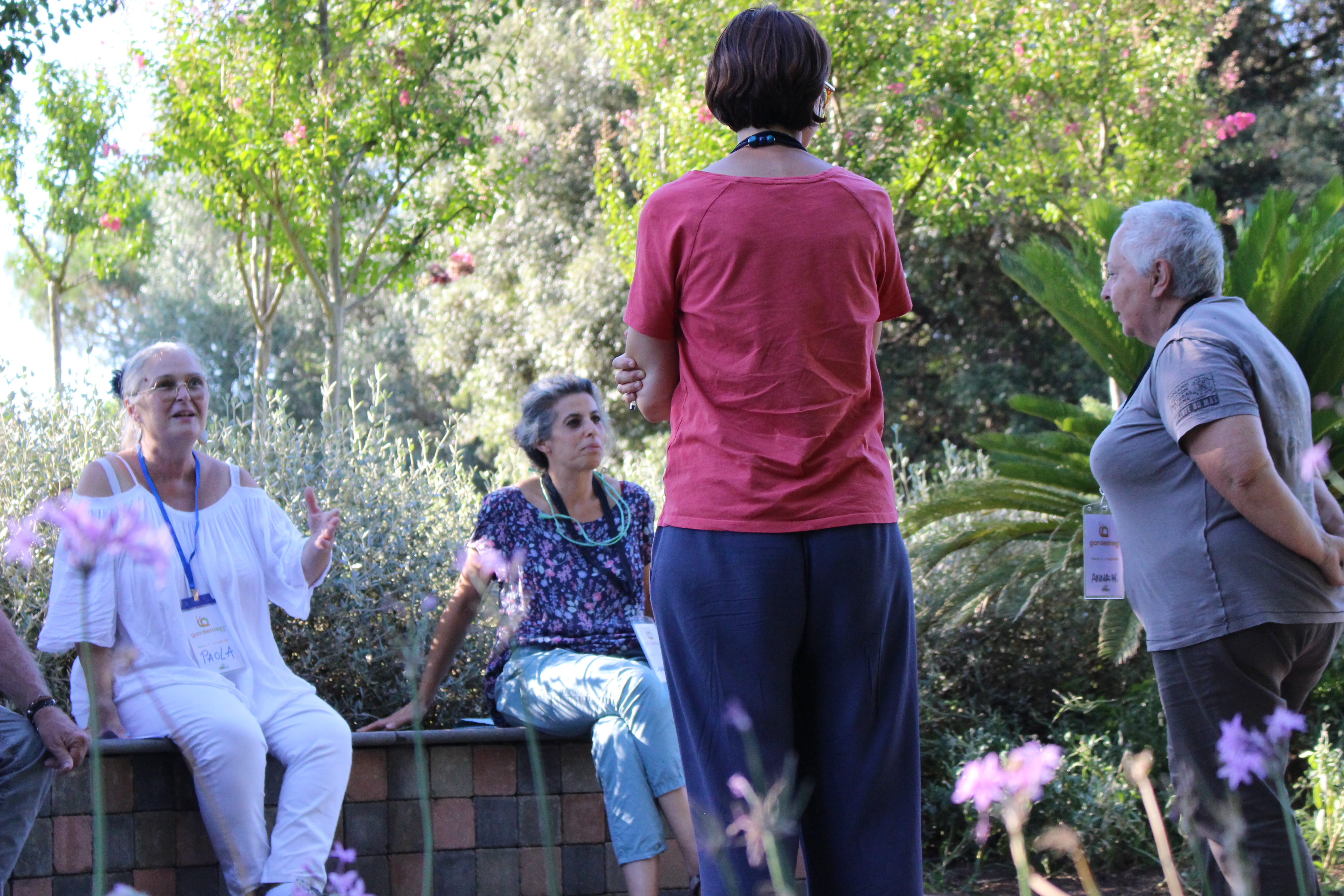
Then there are the urban community gardens, which also include educational gardens, social gardens and shared gardens (cultivated collectively by a group) that are managed collectively and for the benefit of the gardeners and the local area for a variety of purposes including leisure, recreation, social activities, well-being, education, inclusion and integration. Growing food may be one of their characteristics, but it may not be their main or sole purpose. They come in all shapes and sizes, ranging from tiny nature gardens to fruit and vegetable patches between housing estates, from community greenhouses to community-managed market gardens. Community gardens are often created by groups of local people on a voluntary basis and generally maintain a strong degree of involvement. Some larger community gardens also employ workers, while others are run exclusively by small groups of volunteers. Most have a management committee chosen by the local population; some are run as partnerships with local authorities, maintaining a strong involvement of the local area in which they are located.
For these reasons, a community urban garden is defined as a space that is open and accessible to all citizens. It is a way of recovering and giving back a space to the local community, where people of all ages meet, talk to each other and learn to share, defining their own rules and functioning, self-determining and self-defining themselves as part of a community. It is not only a way of taking care of the environment, but also and above all a space for welcoming and valuing diversity, where listening, discussing and collaboration make it a laboratory for experimenting and exchanging ideas and knowledge, for learning together through doing together. The community garden is a common good, a space naturally dedicated to lifelong learning, especially in the field of adult education.
The collective objectives normally referred to for the implementation and management of Community Gardens are:
- promote land safeguard, putting in value the green and agricultural heritage and the protection of biodiversity;
- promoting good practices in regulating the use and recovery of natural resources;
- develop resilience and active community participation, increasing local food security;
- educating for beauty and landscaping;
- promote good practices in the organisation & spatial and cultivation management of Community Urban Gardens;
- promote environmentally compatible ways of agriculture, such as organic farming, permaculture, etc.;
- offer the opportunity to produce a part of one's own vegetable needs in a healthy, ecologically and socially sustainable manner;
- create paths of active citizenship, as opportunities for social aggregation that foster interpersonal relationships, knowledge and appreciation of the urban environment, developing moments of sociability and meeting;
- promote and foster the development of a culture of sustainable and resilient environmental practices, raising awareness among citizens, families, groups and associations in the area and public institutions, especially schools, of the need to safeguard and redevelop the territory through processes of shared administration of common goods;
- promote an intergenerational meeting space that enhances the exchange of knowledge and techniques
- promote positive lifestyles and the development of outdoor activities;
- foster integration, social inclusion, solidarity and intercultural dialogue;
- encourage the recovery of local agricultural traditions and the acquisition of skills through training in the sector, conceiving the Urban Community Garden as a space for learning and innovation.
In managing public land, however, it is necessary to take into account the fact that the community urban garden is certainly not the most efficient way of cultivating land from the point of view of productivity. In fact, some elements play against its realisation, if one considers it only from a productive point of view, compared to any farm that cultivates with an agro-ecological approach:
- the small size of the land in urban areas, and often also the quality of the soil itself, do not allow for productive efficiency levels to be achieved
- water consumption is 5 to 10 times higher than in traditional agriculture
- tools used collectively are more easily subject to wear and tear and therefore more frequent replacement, not always with the most advanced or efficient ones
- the almost always voluntary nature of the workforce is not only not conducive to its use in an efficient sense, but also has a low component of professionalisation, poor information and techniques, and a cyclical and repeated lack of experience, due to the various changes over time
- the types of cultivation chosen, precisely because they are the prerogative of gardeners based not only on their own needs but also on their own pleasure, are not always the most suitable for the soil, climate, etc.
However, what matters here is the social density of each kg produced, tipping the scales in favour of these socially relevant projects.
ADAPTATION FROM THE DIAMOND MODEL EDITED BY THE EDIBLE CITIES NETWORKBy adapting the representation of the well-known diamond model of the Edible Cities Network, it is possible to render also visually how a given dimension related to the community of gardeners acting on a given dimension of physical resources (land, tools, plants, structures, etc.) can generate an impact on the community (territory, city, ...) hosting the community urban garden that can touch several other dimensions:
- Landscape and urban decorum (aesthetic)
- Personal well-being (including health aspects)
- Social
- Educational
- Environmental (including food-related production)
For this reason, when the community decides on a community urban garden, it should consider different dimensions that need to be accommodated and mutually synergised.
To arrive at a community urban garden design such as the one shown as an example is therefore necessary:
Design the garden from a naturalistic point of view with respect to the terrain, location, climate, availability and position of water sources, plant associations and the naturalistic ambitions of the gardeners
Design the urban garden from the point of view of the gardeners who will cultivate it and of any volunteers and visitors who will populate it, trying to study spaces for socialising and for activities other than cultivation, as well as providing free spaces for what the next generations of gardeners may contribute to its development
Designing the community urban garden from the point of view of the needs of the community in which it is located; by community meaning the neighbourhood, the city and also neighbourhood institutions with which to relate in order to sustain the implementation of environmental and social policies, which can see in the garden itself a real hub for the realisation of their key actions
GRAPHIC MODEL DESIGNED BY ORTI DELLA DIVERSITÀ - VIGNONE SCANDICCI (TUSCANY - ITALY)The Gardeniser Hub project has therefore constructed a training format, derived from Gardeniser PRO training format, specifically aimed at those who find themselves managing both environmental policies and the management of green spaces, as well as those who take care of social policies. The format produced by Gardeniser HUB is called Gardeniser GOV(ernance) and has a duration of a total of 24 hours: it ranges from general knowledge of the functioning and characteristic features of a community urban garden to the analysis of the elements of the Social Return on Investments that make it possible to identify the so-called Community Impact Indexes, the subject of the next Erasmus+ project proposal, this time presented in Italy. The course aims to build the conditions for public authorities to exercise SUPPORTIVE coordination of community gardens, putting them in value as a hub for grounding public policies through the active participation of citizens. Among other things, this is a necessary condition for the public sector to act as a guarantor vis-à-vis the business world that intends to apply its corporate social responsibility and thus make resources available to invest in the development of community urban gardens.